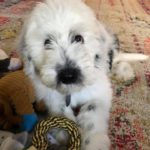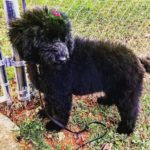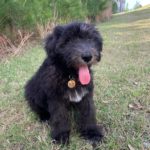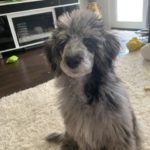
Unless your puppy is an adult, he or she will not be fixed before coming home. Animal shelters desex puppies as a form of population control, but it’s really in the best interest of the dog’s long-term health. Puppies should really reach close to their adult weight and growth before being spayed or neutered as not to negatively affect the maturation process. We introduce puppies to the crate-training process. We begin familiarizing your puppy with a crate around 3-4 weeks. Even before this point, however, puppies have already been familiarized with their moms’ crates. Our puppies are introduced to their crates for naps but are not fully crate trained since most puppies are not developmentally ready for full (overnight) crate training until at least 7 or 8 weeks, which is when they are already going home to you! Tinier puppies often take longer to crate train because their overall growth process takes a bit longer than medium and standard-sized puppies. Our goal is for your puppy to see their crate as their “den” and to be comfortable with being in their crates before they start their new lives with their forever families. We find that beginning crate training here makes our pups’ transition to their new homes much easier on them and on their new families. We’ve received feedback from many families who truly appreciate their pup’s familiarity with the crate. This jumpstarts their puppy’s ability to follow a nighttime routine within a few days of arriving home. For poodles, generally, yes, we do take puppies to the vet to dock tails and remove dewclaws. We choose a 2/3 dock (AKC standard), and we remove dewclaws because many people prefer them removed for a variety of reasons, including ease of grooming. Docking and dewclaw removal is included in the price of poodles. However, there are times when we may choose to keep a litter of poodles with natural tails and dewclaws intact. Also, if you are among the first on a list of ours, you may request that your puppy’s tail be left natural and/or dewclaws left in tact. For doodles, generally, no, we do not dock or remove dewclaws. Your puppy will have been handled from the first day of her birth and every day since by both adults and children. From days 3-16, your puppy will receive ENS (or Early Neurological Stimulation), which is the same program the US military uses to desensitize the dogs they train for special tasks. We routinely bathe, blow dry, and clip nails of every puppy throughout their 8-10 weeks before they come to you. We now provide at least three sets of immunizations for every puppy that goes home including two rounds of NeoPar (protection again Parvo virus) and one DHPP combination vaccine. Your puppy will receive deworming from 3 weeks onward every 1-2 weeks and additionally at our discretion if needed. Between 8-9 weeks, your puppy will visit our veterinarian to be checked over for any health issues. Your puppy will begin potty training at three weeks of age and crate training at 5-6 weeks of age. Please keep in mind that your puppy is only introduced to these concepts and has not mastered them yet. No puppy is fully potty trained or crate trained at 8 weeks old. Your puppy will be exposed to all kinds of sounds, textures, and environments as well as other dogs (of course), cats, and farm animals. Your puppy will also come with a puppy pack complete with immunization and deworming records, puppy gift basket, and a several-day supply of his current food with feeding instructions. Yes, we provide a one-year health guarantee against any testable inheritable genetic disease (testable at time of purchase). Our health guarantee does not include conditions which are not 100% scientifically determined to be inherited. We also do not provide a health guarantee for hips, elbows, patellas, etc. because many instances of dysplasia are caused by environmental factors, NOT by inheritance. However, if a puppy develops any of these orthopedic conditions unreasonably young, we will still cover the puppy with our guarantee at our discretion. We do our best to be as familiar as current science allows with our lines and the genetic makeup of each individual dog. If there’s any discrepancy, we sometimes even test dogs with multiple labs just to double and triple check that we know what is going with our parents. Generally, we do not allow visits to our farm to visit our very young puppies for their health and safety and the health and safety of our children. We will provide bi-weekly photos and videos to share the puppies’ milestones and their budding personalities. We are also available to facetime in order for you to select your puppy.
FAQs
Category:
About My Puppy
Category:
About My Puppy
Category:
About My Puppy
Category:
About My Puppy
Category:
About My Puppy
Category:
About My Puppy